

[INT-03]Redelivery and condition
Pre-purchase inspection for a commercial aircraft: scope, records and limits
Jet ResearchReviewed 6 min read
A pre-purchase inspection is a buyer's technical review of an aircraft and its records before committing to buy or lease it. It establishes the aircraft's actual condition and maintenance status against what the seller has represented. Its value depends on its scope, so the scope should be agreed in writing before anyone travels to the aircraft.
Key points
- It is a records review and a physical inspection. The records half is usually the larger.
- It is a snapshot within agreed limits, not a heavy check and not a certificate of airworthiness.
- What was agreed to be inspected matters as much as what was found.
What is a pre-purchase inspection?
Before a buyer or lessee commits to an aircraft, they send a technical representative to look at it. The purpose is simple: to find out what is really being bought. The seller's specification sheet says one thing. The aircraft and its records may say another.
The inspection is carried out for the buyer and is independent of the seller and the current operator.
What does a pre-purchase inspection cover?
A typical scope has three parts.
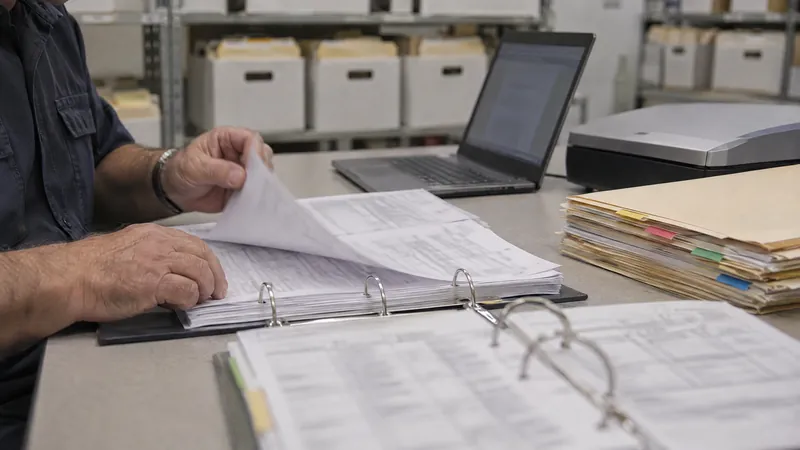
- Records: airworthiness directive status, life limited part status and history, check status, modification status, repairs and their approvals, and component status with certificates.
- Physical inspection: structure and corrosion in the zones that can be opened, repairs compared with their records, landing gear, cabin and cargo compartments, and general condition.
- Engines: borescope inspection, records and recent performance data.
Function checks and a demonstration flight are added where the parties agree. Life limited parts are checked for back to birth traceability, because a gap there can change the value of the aircraft more than any visible defect.
What does it not cover?
A pre-purchase inspection is not a heavy check. Panels stay closed unless opening them was agreed. Areas that cannot be reached without major access are not seen. The inspector works within the time and access the seller allows.
It is also a snapshot. It describes the aircraft on the days it was inspected. It does not certify airworthiness and it is not a warranty.
How should the scope be set?
In writing, before the inspection. The scope should say which records will be made available, which panels and zones will be opened, whether engines will be borescoped and by whom, whether there will be engine runs or a flight, and how long the inspector will have.
A clear scope protects both sides. The buyer knows what the report can be relied on for. The seller knows what was and was not looked at. When a defect is found after the sale, the first question asked is whether it fell inside the agreed scope, which is why scope is central to pre-purchase inspection disputes.
What should the report contain?
A useful report lets the buyer make a decision and negotiate. It should set out:
- The scope as carried out, including anything agreed that could not be done and why.
- Each finding, with its evidence: photograph, document reference or measurement.
- The maintenance status: checks, engines, landing gear and life limited parts.
- Open items in the records, and what would be needed to close them.
- The findings that carry a material cost, so they can be priced.
How does it differ from other inspections?
A pre-purchase inspection supports a decision to buy. A lease acceptance confirms that an aircraft meets the delivery conditions of a lease that is already agreed. A mid-lease inspection checks how an operator is keeping an aircraft during the lease. The skills overlap. The question being answered is different each time.
Jet Research carries out pre-purchase inspections for buyers, lessors and lenders, singly and as part of aircraft acquisition programs.
Short answers.
- Who performs a pre-purchase inspection?
- A technical representative working for the buyer, independent of the seller. The inspection takes place where the aircraft is, with the operator or a maintenance organisation providing access.
- How long does a pre-purchase inspection take?
- For an airliner it is usually measured in days on site, plus the time needed for the records. The agreed scope and the access the seller allows set the real figure.
- Is a pre-purchase inspection the same as an airworthiness inspection?
- No. It does not certify airworthiness. It tells a buyer what condition the aircraft and its records are in, within the agreed scope, so the buyer can decide and negotiate.
- Should the records or the aircraft be reviewed first?
- Where there is a choice, the records. They show where to look on the aircraft, and a serious records problem can end a transaction before anyone needs to travel.
Where this becomes a job.
- capabilitiesPre-purchase inspectionsRecords and aircraft reviewed for the buyer.
- capabilitiesLease acceptancesDelivery condition confirmed before the lease starts.
- capabilitiesAircraft acquisition programsInspection and records work across a fleet purchase.
- expert witnessPre-purchase inspection disputesExpert opinion on scope, findings and what was missed.
 INT-02Back to birth traceability: what it means and why one gap mattersWhat back to birth traceability means for life limited aircraft parts, what the record has to contain, where gaps come from and what can be done about them.6 min read
 INT-04Mid-lease inspections: what an aircraft owner should check, and whenWhat a mid-lease aircraft inspection is, what the owner's inspector checks on the aircraft and in the records, and how it protects the return.5 min read
 INT-05 / Start hereWhat does an aviation maintenance expert witness do?The role of an aviation maintenance expert witness: the cases, the material reviewed, what goes in the report, and when counsel should bring one in.6 min read
General information on aircraft technical practice. It is not legal advice and it is not an opinion on any particular aircraft, lease or dispute.