

[INT-04]Redelivery and condition
Mid-lease inspections: what an aircraft owner should check, and when
Jet ResearchReviewed 5 min read
A mid-lease inspection is the owner's check on a leased aircraft while it is still flying for the operator. An inspector reviews the aircraft's condition and how its records are being kept, and reports whether both are being maintained as the lease requires. Problems found early can be corrected in service. Problems found at the return become claims.
Key points
- It is the only look the owner gets at the asset between delivery and return.
- The records are inspected as closely as the aircraft.
- The right to inspect, and how often, comes from the lease.
What is a mid-lease inspection?
Once an aircraft is delivered, the owner does not see it again for years. The operator flies it, maintains it and keeps its records. A mid-lease inspection is the owner's opportunity to confirm that this is being done to the standard the lease sets.
It is not an audit of the airline and it is not a maintenance check. It is a focused review of one asset and its file.
What gives the owner the right to inspect?
The lease. Most leases give the owner or its representative the right to inspect the aircraft and its records on reasonable notice, commonly once a year, in a way that does not disrupt the operator's flying. The inspection is normally planned around a maintenance input or a night stop.
What does the inspector check?
On the aircraft and in the file, the inspector looks at:
- General condition: structure, corrosion, leaks, cabin and cargo compartments.
- The maintenance program in use, and whether it is the approved one.
- Airworthiness directive status against the current list.
- Hours and cycles flown, compared with what has been reported to the owner.
- Component changes since the last visit, with their release certificates.
- Where the engines are. Engines move between aircraft, and the owner's engines may be on someone else's wing.
- Repairs carried out, and whether each is documented and approved.
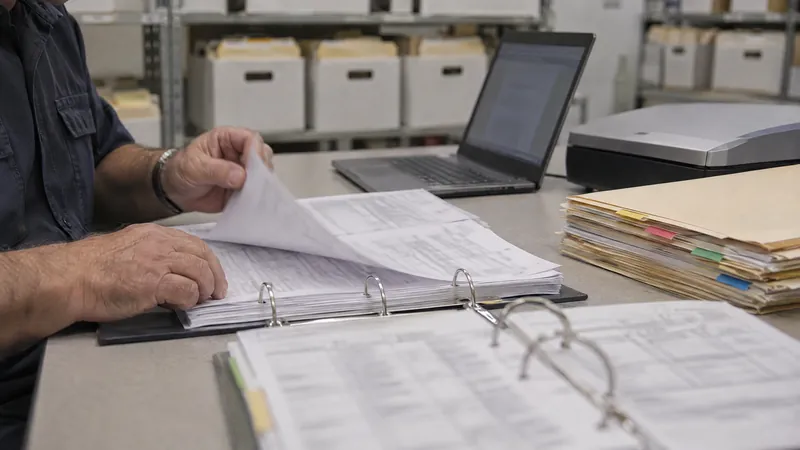
- How the records are stored, indexed and backed up.
- Preservation tasks, if the aircraft is parked.
Parked aircraft need particular attention. An aircraft in storage is still on a maintenance program, and skipped preservation tasks show up later as corrosion and cost. See storage and reactivation.
Why are the records part of it?
Because records problems are the hardest to fix late. A missing certificate is easy to obtain in the month the part was fitted and very hard to obtain six years later from a shop that has closed. A mid-lease review catches the gap while the people and documents are still within reach.
This is the same discipline as a full maintenance records audit, applied to a sample, and it is what keeps back to birth traceability intact through the lease.
What happens with the findings?
The inspector reports to the owner with evidence for each finding. The owner raises them with the operator under the lease, and the two agree how and when each will be corrected. The next inspection confirms it was done.
Where an operator is in financial difficulty, the same findings tell the owner how exposed the asset is. That can inform a decision about repossession.
How does it protect the lease return?
Every return condition is easier to meet if the aircraft and its file have been kept in order throughout. An owner who has inspected each year knows the state of the asset before the return starts, and has a dated record of what was raised and when. If the return is later contested, that record is evidence.
Jet Research carries out mid-lease audits and inspections for lessors and lenders.
Short answers.
- How often should a leased aircraft be inspected?
- As often as the lease allows and the risk justifies. Leases commonly permit one inspection a year. Owners often inspect sooner after delivery to a new operator, or when there are signs of financial or operational strain.
- Does a mid-lease inspection interrupt the airline's operation?
- It should not. It is planned with the operator around a scheduled maintenance input or a night stop, and the records are reviewed at the operator's technical office.
- What if the inspection finds a problem?
- The owner raises it with the operator under the lease and the two agree a correction plan. What the owner can require depends on the terms of the lease.
- Is a mid-lease inspection the same as a records audit?
- It includes a records review, usually of a sample. A full records audit goes through the whole file and is more often done ahead of a sale or a return.
Where this becomes a job.
- capabilitiesMid-lease audits and inspectionsAircraft and records checked during the lease term.
- capabilitiesMaintenance records auditsThe whole file reviewed against lease and regulation.
- capabilitiesStorage and reactivationParked aircraft kept on program and brought back.
- who we serveWho we serveLessors, lenders, airlines and their counsel.
 INT-01 / Start hereAircraft lease return conditions: what has to be proven at redeliveryWhat aircraft lease return conditions cover, why most of the proof is in the records, when a redelivery should start and where returns usually go wrong.6 min read
 INT-02Back to birth traceability: what it means and why one gap mattersWhat back to birth traceability means for life limited aircraft parts, what the record has to contain, where gaps come from and what can be done about them.6 min read
 INT-03Pre-purchase inspection for a commercial aircraft: scope, records and limitsWhat a pre-purchase inspection of a commercial aircraft covers, what it does not cover, how the scope should be set and what the report should contain.6 min read
General information on aircraft technical practice. It is not legal advice and it is not an opinion on any particular aircraft, lease or dispute.